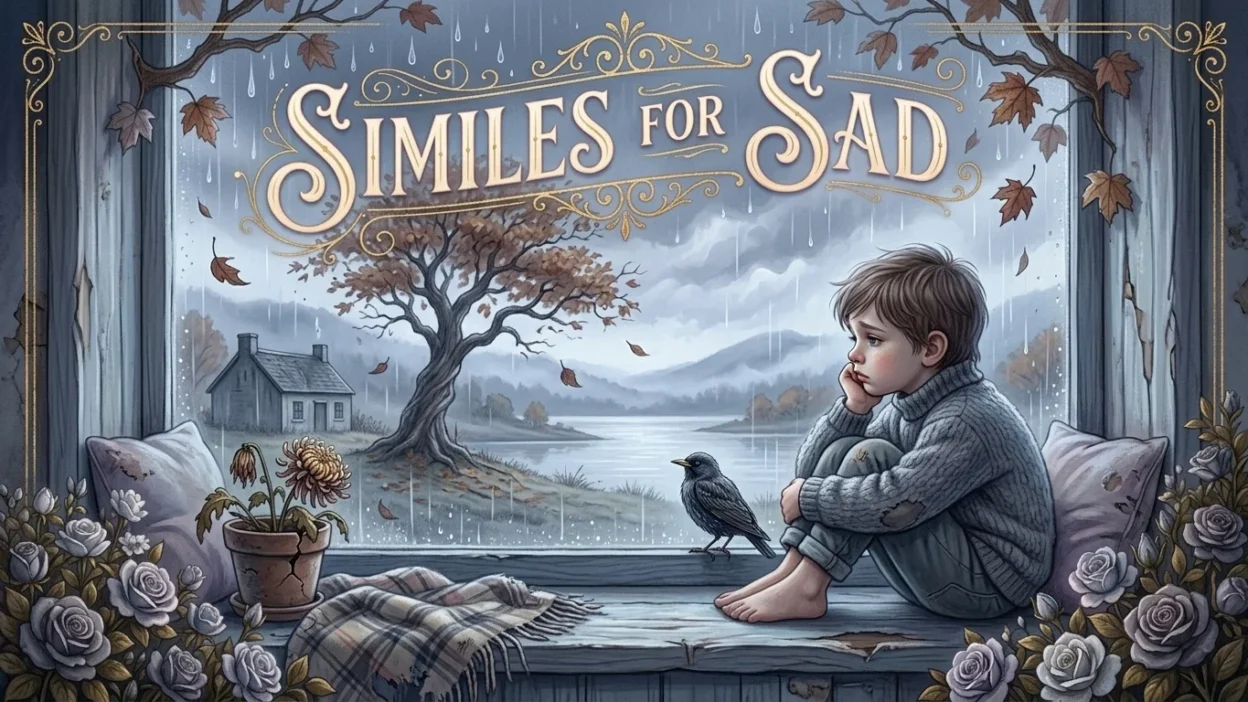
Sadness is a natural emotion that everyone experiences at some point. Whether you’re writing a story, poem, journal entry, or school assignment, simply saying someone is “sad” may not fully express how they feel. That’s where similes can help. A simile compares two different things using the words “like” or “as”, making emotions easier to imagine and more meaningful to readers.
For example, saying “She felt as lonely as a cloud drifting across the sky” creates a stronger emotional picture than simply saying she was lonely. Similes help readers connect with characters and understand feelings on a deeper level.
In this guide, you’ll discover 100+ similes for sad, learn their meanings, explore examples of similes, read simile sentences, and get practical tips on how to use similes in writing. By the end, you’ll have plenty of creative ideas to describe sadness in vivid and memorable ways.
What Is a Simile?
A simile is a figure of speech that compares two unlike things using like or as.
Examples
- As quiet as the night
- Like rain falling on a window
- As lonely as a single star
Similes make writing more expressive by helping readers picture emotions and situations more clearly.
100+ Similes for Sad
Nature-Inspired Similes
- As gray as a rainy day
- Like leaves falling in autumn
- As lonely as a cloud in the sky
- Like a flower without sunlight
- As quiet as the evening mist
- Like rain on a windowpane
- As cold as winter wind
- Like waves fading on the shore
- As empty as a dried-up river
- Like a tree without leaves
- As still as a frozen lake
- Like fog covering the hills
- As pale as moonlight
- Like a sunset disappearing
- As silent as snowfall
Weather Similes
- Like a storm cloud overhead
- As gloomy as a cloudy afternoon
- Like thunder before the rain
- As dark as a moonless night
- Like endless drizzle
- As cold as icy rain
- Like mist hiding the mountains
- As heavy as storm clouds
- Like the sky before dawn
- As quiet as falling rain
Animal Similes
- As lonely as a lost puppy
- Like a bird with a broken wing
- As quiet as a sleeping owl
- Like a fish out of water
- As helpless as a baby bird
- Like a wolf separated from its pack
- As slow as a tired turtle
- Like a butterfly caught in the rain
- As silent as a frightened deer
- Like a kitten left alone
Heartfelt Similes
- As broken as shattered glass
- Like an empty room
- As heavy as a stone
- Like tears falling in silence
- As fragile as thin ice
- Like a forgotten song
- As lonely as an empty bench
- Like a candle burning out
- As empty as an abandoned house
- Like a balloon losing air
Friendship and Relationship Similes
- Like a letter never answered
- As distant as fading echoes
- Like a forgotten birthday
- As empty as an unused playground
- Like a hug that never came
- As quiet as an empty classroom
- Like a broken promise
- As lonely as one chair at a table
- Like a phone that never rings
- As cold as a closed door
Poetic Similes
- Like stars hidden behind clouds
- As soft as whispered tears
- Like the last leaf of autumn
- As faded as an old photograph
- Like music without sound
- As quiet as forgotten dreams
- Like the final page of a sad story
- As dim as a fading candle
- Like a bird singing alone
- As distant as yesterday
Similes for Kids
- As sad as losing your favorite toy
- Like a balloon that popped
- As quiet as a library after school
- Like ice cream melting away
- As lonely as one sock without its pair
- Like a puzzle missing a piece
- As unhappy as a rainy picnic
- Like recess getting canceled
- As disappointed as an empty cookie jar
- Like a kite without wind
Creative Similes
- Like shadows stretching at sunset
- As gray as old ashes
- Like a painting without color
- As slow as a fading heartbeat
- Like an unfinished melody
- As silent as an unopened letter
- Like smoke disappearing into the air
- As empty as a blank page
- Like footsteps fading away
- As quiet as sleeping forests
Unique Similes
- Like the last star before dawn
- As lonely as an island at sea
- Like waves washing away footprints
- As empty as a forgotten road
- Like the wind leaving autumn trees
- As quiet as midnight snow
- Like a wilted flower
- As gentle as silent tears
- Like a book with the final page missing
- As faded as old memories
Similes for Deep Sadness
- As heavy as carrying the whole world
- Like a heart made of stone
- As endless as the ocean
- Like walking through endless rain
- As dark as the deepest cave
- Like a candle flickering in the wind
- As hollow as an empty shell
- Like a lonely lighthouse in a storm
- As silent as abandoned streets
- Like winter without spring
1. As Lonely as a Cloud
Meaning: Feeling completely alone.
What it conveys: Isolation and loneliness.
Example Sentences:
- After moving away, Emma felt as lonely as a cloud.
- The old house stood as lonely as a cloud on the hill.
2. Like Rain Falling on a Window
Meaning: Quiet, gentle sadness.
What it conveys: Calm but emotional feelings.
Example Sentences:
- His thoughts drifted like rain falling on a window.
- The silence felt like rain falling on a window.
3. As Broken as Shattered Glass
Meaning: Deep emotional pain.
What it conveys: A heart that feels damaged.
Example Sentences:
- She felt as broken as shattered glass after the goodbye.
- His confidence was as broken as shattered glass.
4. Like a Flower Without Sunlight
Meaning: Feeling unhappy and lacking joy.
What it conveys: Emotional emptiness.
Example Sentences:
- Without her friends, Lily felt like a flower without sunlight.
- The lonely puppy looked like a flower without sunlight.
5. As Heavy as a Stone
Meaning: Carrying emotional weight.
What it conveys: A burdened heart.
Example Sentences:
- My heart felt as heavy as a stone after hearing the news.
- He walked home as heavy as a stone with disappointment.
Practical Exercise
Questions
1. Complete the simile:
As lonely as a ________.
2. Fill in the blank:
Like rain falling on a ________.
3. Which simile describes deep emotional pain?
A. As broken as shattered glass
B. As bright as the sun
4. Finish the simile:
Like a flower without ________.
5. Write your own simile using like or as to describe sadness.
Answers with Explanations
1. Cloud
A cloud drifting alone represents loneliness and isolation.
2. Window
Rain on a window often symbolizes quiet sadness and reflection.
3. A. As broken as shattered glass
This simile represents emotional hurt and heartbreak.
4. Sunlight
A flower without sunlight cannot thrive, making it a strong symbol of sadness.
5. Sample Answer
My heart felt like a boat drifting alone at sea.
This compares sadness to isolation using the word like.
Tips for Writing Your Own Sad Similes
Creating creative writing similes becomes easier with practice:
- Think about the emotion you want to describe.
- Choose an image from nature or everyday life that matches the feeling.
- Use like or as to connect the comparison.
- Keep the image simple and easy to picture.
- Make sure the simile fits the mood of your writing.
Examples:
- Her silence was like snow covering a quiet town.
- His hope faded like the last light of sunset.
- The room felt as empty as an abandoned theater.
- My thoughts drifted like leaves floating down a river.
Conclusion
Using similes for sad helps you express emotions in a more vivid and meaningful way. Instead of simply saying someone is sad, you can compare those feelings to rain, fading sunsets, lonely clouds, or wilted flowers to create memorable imagery. These comparisons make stories, poems, and personal writing more emotional and engaging.
Now that you’ve explored over 100 sad similes, try writing a few of your own. With practice, you’ll discover new ways to describe emotions that connect with your readers and bring your writing to life.
Frequently Asked Questions
1. What is a simile for sad?
A simile for sad compares sadness to something else using like or as, such as “as lonely as a cloud” or “like rain falling on a window.”
2. What are common similes for sadness?
Popular examples include as broken as shattered glass, like a flower without sunlight, as heavy as a stone, and like a candle burning out.
3. Why are similes useful for describing emotions?
Similes create vivid mental images, helping readers understand and connect with emotions more deeply.
4. Can children use sad similes?
Yes. Simple comparisons such as “as sad as losing your favorite toy” or “like a balloon that popped” are easy for children to understand and use.
5. How do I create my own sad simile?
Think about the feeling you want to express, choose something that reflects that emotion, and connect them using like or as.

Anastasia Volkov is a fictional Russian linguist and educational content creator who specializes in idioms, proverbs, and cultural expressions. She is passionate about helping students and language learners understand the hidden meanings behind everyday phrases. Her articles combine linguistic knowledge with historical context, making them informative and enjoyable to read. Anastasia believes that learning idioms is one of the best ways to achieve fluency and gain a deeper understanding of Russian culture. She regularly creates educational resources that simplify complex language concepts for readers around the world. Her friendly writing style and dedication to language education have made her a trusted voice for those interested in Russian expressions.