
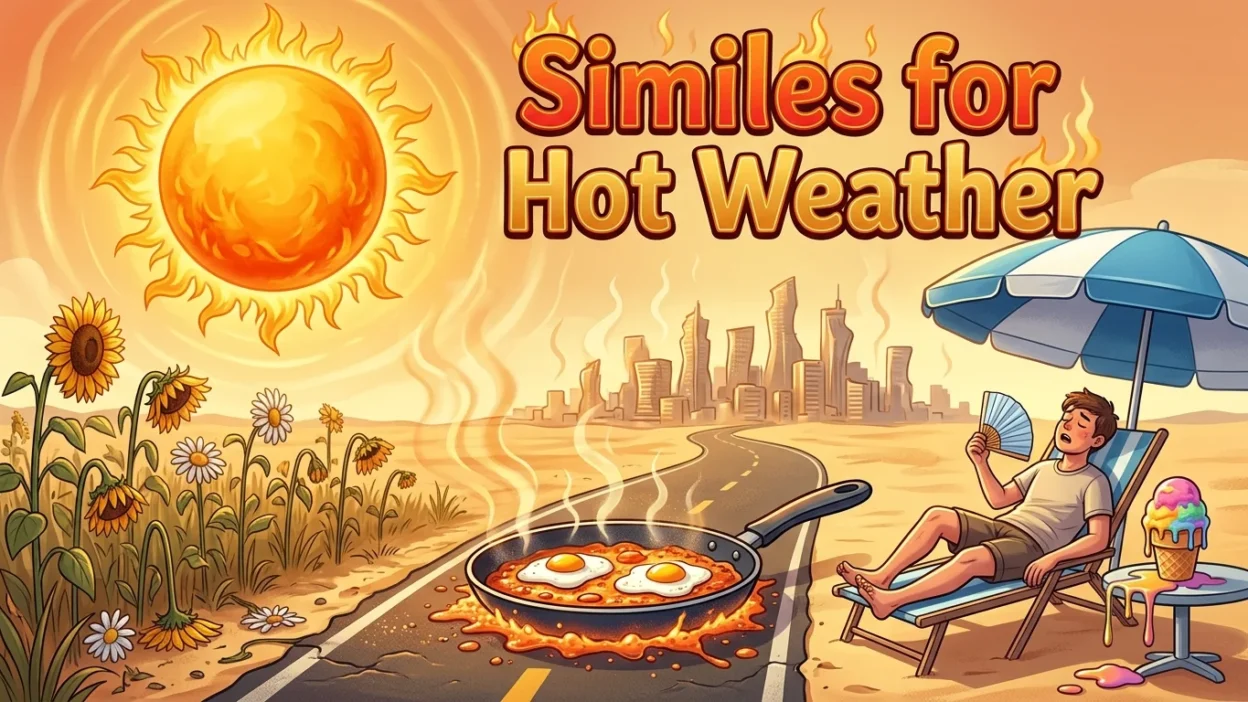
Hot weather can make an ordinary day feel like an adventure in a giant oven. The sun blazes overhead, the pavement feels like a frying pan, and even a gentle breeze can feel like a warm breath. Whether you are describing a scorching summer afternoon, a humid day, or a heatwave, the right words can help readers feel the heat through your writing.
That is where similes come in. A simile compares one thing to another using words such as like or as. For example, “The sun was as hot as a furnace” creates a clear picture of intense heat. Similarly, “The pavement felt like a frying pan” helps readers imagine how hot the ground has become.
Similes for hot weather are useful in poems, short stories, school assignments, creative writing, and everyday conversations. They can make descriptions more colorful, funny, emotional, and memorable.
In this guide, you will discover creative similes for scorching sunshine, humid afternoons, hot wind, summer days, and much more. You will also find example sentences, writing tips, practice questions, and answers to help you develop your own comparisons.
What Is a Simile for Hot Weather?
A simile for hot weather is a figure of speech that compares heat or hot conditions to something familiar. It uses like or as to help readers imagine how hot, uncomfortable, or sunny a place feels.
For example:
- The afternoon was as hot as an oven.
- The sun beat down like a hammer.
- The pavement felt like a frying pan.
- The air was as thick as warm soup.
- The desert shimmered like a sea of fire.
These comparisons make descriptions more vivid than simply saying, “It was very hot.”
1. Similes for Extremely Hot Weather
Use these similes to describe unbearable heat and scorching conditions.
- The weather was as hot as an open oven.
- The afternoon felt like standing inside a furnace.
- The air burned like a thousand tiny flames.
- The day was as scorching as a desert at noon.
- The sun blazed like a giant ball of fire.
- The streets felt like the floor of a giant sauna.
- The heat wrapped around us like a burning blanket.
- The afternoon was like a furnace with no door.
- The air felt as hot as steam from a kettle.
- The heat struck my face like an open oven door.
- The day burned like a bonfire under a blue sky.
- The weather felt like living inside a giant toaster.
- The ground radiated heat like a glowing stove.
- The afternoon was as fierce as a dragon’s breath.
- The heat pressed against us like a wall of fire.
2. Similes for the Hot Sun
These comparisons describe the brightness and power of the summer sun.
- The sun was as bright as a giant spotlight.
- The sun blazed like a ball of molten gold.
- The sunlight poured down like liquid fire.
- The sun glared like a giant searchlight.
- The sun shone like a glowing furnace in the sky.
- The sunlight burned like a thousand candles.
- The sun hung overhead like a giant orange lantern.
- The rays struck the earth like golden arrows.
- The sun glowed like a freshly forged piece of metal.
- The sunlight spread across the fields like a golden sheet.
- The sun was as fierce as a roaring lion.
- The rays fell like hot needles on my skin.
- The sun blazed like a torch in the sky.
- The sunlight flooded the street like molten gold.
- The sun stared down like an enormous glowing eye.
3. Similes for a Scorching Summer Day
These similes capture the feeling of a long, hot summer afternoon.
- The summer day was as hot as a freshly baked pie.
- The afternoon felt like a blanket fresh from the dryer.
- The streets shimmered like a mirage in the desert.
- The day dragged on like a slow-moving train.
- The heat hung over the town like a heavy curtain.
- The afternoon was as dry as an old bone.
- The summer sun cooked the fields like an outdoor oven.
- The day felt like a vacation inside a sauna.
- The air shimmered like glass above a flame.
- The afternoon stretched like a hot, endless road.
- The weather was as relentless as a dripping tap.
- The summer heat wrapped around the town like wool.
- The day glowed like a giant amber lamp.
- The afternoon was like a giant frying pan under the sun.
- The heat lingered like a guest who refused to leave.
4. Funny Similes for Hot Weather
Add humor to your writing with these playful comparisons.
- The weather was as hot as a dragon’s armpit.
- I was sweating like an ice cube at a barbecue.
- The pavement was like a frying pan for giant pancakes.
- The sun was as bossy as a teacher during an exam.
- The heat hit me like a hair dryer on full power.
- My shirt clung to me like a needy puppy.
- The weather felt like living inside a giant pizza oven.
- I was melting like cheese on a hot burger.
- The sidewalk was as hot as a grill at lunchtime.
- The sun followed me like a heat-loving stalker.
- The air was like a dragon breathing down my neck.
- My ice cream disappeared like a magician’s rabbit.
- The heat was as annoying as a mosquito at bedtime.
- The car felt like a toaster with seat belts.
- The afternoon was like a sauna run by a grumpy giant.
5. Similes for Humid Weather
Humidity can make the air feel heavy, sticky, and uncomfortable.
- The air was as thick as warm soup.
- The humidity wrapped around me like a wet towel.
- The air felt like a damp blanket over my face.
- The weather was as sticky as melted candy.
- The humidity clung to my skin like glue.
- The air felt like breathing through a warm sponge.
- The afternoon was as muggy as a crowded steam room.
- The moisture hung in the air like a fine curtain.
- The atmosphere felt like a bathroom after a hot shower.
- The air stuck to us like wet clothing.
- The humidity was as heavy as a waterlogged blanket.
- The breeze felt like warm breath against my cheek.
- The air wrapped around the city like a damp fog.
- The weather was like walking through invisible steam.
- The humidity clung to everything like a layer of syrup.
6. Similes for Heatwaves
Use these comparisons when describing several days of intense, persistent heat.
- The heatwave was like a furnace that never switched off.
- The town baked like a loaf of bread in an oven.
- The sun beat down like a drum that never stopped.
- The heatwave stretched across the region like a blanket of fire.
- The city shimmered like a mirage.
- The days felt as endless as a desert road.
- The heat settled over the land like a heavy lid.
- The ground cracked like an old leather shoe.
- The air trembled like a sheet above a flame.
- The heatwave was as stubborn as a locked door.
- The afternoon burned like a field of dry grass.
- The town felt like a giant greenhouse.
- The sunlight pressed down like a heavy weight.
- The heat lingered like a song stuck in your head.
- The landscape looked like a painting left too close to a fire.
7. Similes for Hot Wind
These similes describe the warm, dry, or scorching wind that blows on hot days.
- The wind felt as hot as a hair dryer.
- The breeze blew like the breath of a dragon.
- The hot wind swept across the fields like a burning wave.
- The air brushed my face like warm sandpaper.
- The wind carried heat like an open oven.
- The breeze felt like a warm hand against my cheek.
- The hot wind rushed through the streets like a speeding train.
- The air blew like steam escaping from a kettle.
- The wind moved across the desert like a wave of fire.
- The breeze was as dry as a forgotten well.
- The hot air swirled around us like smoke.
- The wind scratched my skin like tiny dry leaves.
- The breeze felt like standing beside a giant heater.
- The hot wind swept through the trees like a restless ghost.
- The air rolled across the road like invisible flames.
8. Similes for Hot Weather at School
These comparisons are useful for school essays, classroom stories, and student writing.
- The classroom was as hot as an oven.
- The students sat like melting ice cream cones.
- The playground shimmered like a pan on a stove.
- The classroom air felt like warm soup.
- The teacher fanned herself like a bird spreading its wings.
- The school corridor was as stuffy as a closed cupboard.
- The desks felt like warm stones in the sun.
- The afternoon lesson dragged like a sleepy turtle.
- The children searched for shade like thirsty travelers.
- The classroom felt like a greenhouse without windows.
- The schoolyard baked like a cake in an oven.
- The students wiped their faces like athletes after a race.
- The sunlight poured through the windows like hot gold.
- The school bus felt like a giant toaster.
- The hot afternoon moved as slowly as a snail.
9. Similes for Hot Weather in the City
Cities can feel especially hot when sunlight heats roads, buildings, and sidewalks.
- The city baked like a potato in an oven.
- The asphalt shimmered like black glass.
- The streets felt like the surface of a hot griddle.
- The buildings radiated heat like giant heaters.
- The traffic crawled like snails under the blazing sun.
- The city air was as thick as warm gravy.
- The sidewalks glowed like heated metal.
- The rooftops shimmered like sheets of tin over a fire.
- The streets were as dry as an empty riverbed.
- The city felt like a giant brick oven.
- The sunlight bounced off the windows like flashes from a mirror.
- The parked cars baked like pies in a bakery.
- The air between buildings swirled like steam from a pot.
- The pavement burned like a stove left on high.
- The afternoon heat covered the city like a heavy quilt.
10. Similes for Hot Weather in the Desert
These similes capture the dry, blazing heat of desert landscapes.
- The desert was as hot as a furnace.
- The sand shimmered like molten gold.
- The dunes glowed like hills of amber.
- The air trembled like a curtain above a flame.
- The desert sun burned like a torch.
- The sand felt like a hot frying pan beneath my feet.
- The horizon danced like a mirage.
- The dry air scratched my throat like rough paper.
- The desert stretched like an endless sea of fire.
- The rocks radiated heat like glowing coals.
- The afternoon was as dry as a bone.
- The heat pressed against the traveler like a heavy wall.
- The sand shifted like waves beneath a golden sky.
- The desert wind blew like a giant hair dryer.
- The sun hung overhead like a glowing furnace door.
11. Similes for Sweat and Feeling Hot
Use these comparisons to show how people react to high temperatures.
- Sweat rolled down my face like raindrops.
- My forehead glistened like a freshly polished apple.
- My shirt clung to my back like wet paper.
- I sweated like a runner at the finish line.
- My face felt as hot as a freshly baked potato.
- Sweat trickled down my neck like a tiny stream.
- My skin felt like it was wrapped in warm cloth.
- My hair stuck to my forehead like wet grass.
- I felt as hot as a kettle about to boil.
- Sweat covered my arms like a layer of dew.
- My palms were as damp as a wet sponge.
- The heat made me feel like a candle near a flame.
- My face burned like a red-hot coal.
- My clothes felt like a wet blanket.
- Sweat rolled off me like water from a leaking tap.
12. Similes for Hot Weather in Nature
These comparisons describe how high temperatures affect plants, animals, and the landscape.
- The grass was as dry as straw.
- The flowers drooped like tired dancers.
- The leaves hung like wilted flags.
- The pond shrank like a puddle beneath a thirsty sun.
- The fields looked like a golden carpet left in an oven.
- The trees stood like tired giants beneath the sun.
- The soil cracked like broken pottery.
- The plants wilted like flowers forgotten in a vase.
- The birds rested like sleepy travelers.
- The river glittered like a ribbon of silver.
- The dry grass rustled like paper in the wind.
- The garden looked as thirsty as a traveler in the desert.
- The leaves curled like old parchment.
- The sunlight spread across the hills like a golden blanket.
- The earth baked like clay inside a kiln.
13. Similes for Hot Weather at the Beach
The beach can be beautiful in summer, but the sand and sunshine can become extremely hot.
- The sand was as hot as a frying pan.
- The beach glittered like a field of golden coins.
- The sunlight sparkled on the water like scattered diamonds.
- The sand burned my feet like a heated plate.
- The sea breeze felt like a warm kiss.
- The beach umbrella stood like a tiny island of shade.
- The waves rolled like blue ribbons across the shore.
- The sun shone like a giant golden spotlight.
- The sand clung to my feet like warm flour.
- The beach felt like a giant outdoor oven.
- The hot rocks felt like stones beside a fireplace.
- The ocean shimmered like blue glass under the summer sun.
- The heat wrapped around us like a warm towel.
- The beachgoers searched for shade like travelers searching for shelter.
- The sand glowed like golden powder beneath the sunlight.
14. Similes for Hot Weather in Creative Writing
These imaginative comparisons can make poems, novels, and descriptive essays more engaging.
- The heat was like an invisible monster stalking the town.
- The sun glared like an angry eye in the sky.
- The afternoon melted like a candle.
- The heat crept across the land like a silent thief.
- The sky burned like a sheet of copper.
- The sun poured fire onto the earth like a careless giant.
- The heat wrapped around the world like a fiery snake.
- The road shimmered like a river made of glass.
- The afternoon stood still like a painting.
- The sun hung above the fields like a burning crown.
- The air shimmered like a veil of magic.
- The heat pressed down like a giant’s hand.
- The dry earth cracked like an ancient map.
- The summer sky stretched like a blue silk sheet.
- The heat lingered like a memory that refused to fade.
15. Similes for Hot Weather for Kids
These simple comparisons are ideal for young learners and elementary school assignments.
- The day was as hot as an oven.
- The sun was like a giant yellow lamp.
- The sand felt like a hot plate.
- My ice cream melted like snow in the sunshine.
- The air was as warm as a blanket.
- The pavement felt like a frying pan.
- The sun shone like a golden ball.
- The playground was as hot as toast.
- The flowers drooped like sleepy heads.
- The wind felt like warm breath.
- The car was like a big hot box.
- My face was as red as a tomato.
- The hot sidewalk felt like a giant grill.
- The afternoon was as sticky as honey.
- The sun followed me like a friendly yellow balloon.
Simile Sentences for Hot Weather
Here are 15 complete sentences that show how to use hot-weather similes naturally.
- The afternoon was as hot as an oven, so we stayed inside.
- The sun beat down like a hammer on the empty street.
- The pavement shimmered like a river made of glass.
- The air felt as thick as warm soup after the rain.
- The heat wrapped around the town like a burning blanket.
- My ice cream melted like snow under a spotlight.
- The desert sand glowed like molten gold beneath the midday sun.
- The hot wind brushed my face like air from a hair dryer.
- The classroom was as stuffy as a closed cupboard.
- Sweat rolled down my forehead like tiny raindrops.
- The flowers drooped like tired dancers in the garden.
- The city baked like a giant pie inside an oven.
- The beach sand felt like a hot plate beneath my feet.
- The sun blazed like a giant torch in the cloudless sky.
- The heat lingered like an unwelcome guest long after sunset.
How to Use Similes for Hot Weather in Writing
Similes can make your writing more vivid by helping readers imagine what extreme heat looks, feels, and sounds like.
- For descriptive essays: Describe the sun, air, and ground. For example, “The pavement shimmered like black glass.”
- For poems: Choose comparisons that create emotion or atmosphere. For example, “The afternoon melted like a candle.”
- For short stories: Use similes to show how characters experience the heat. For example, “The hot wind brushed her face like a hair dryer.”
- For funny writing: Use playful comparisons. For example, “The car felt like a toaster with seat belts.”
- For school assignments: Choose clear and familiar images. For example, “The day was as hot as an oven.”
Try not to crowd every sentence with a comparison. One strong simile in the right place can be more effective than several weak ones.
How to Create Your Own Similes for Hot Weather
Creating original similes is easy when you follow a few simple steps.
- Choose what feels hot. It might be the sun, pavement, air, sand, or your skin.
- Think of something familiar. Consider an oven, a frying pan, a heater, a flame, or a warm blanket.
- Use “like” or “as.” Connect the two ideas to make a comparison.
- Match the feeling. Use funny comparisons for humor and powerful comparisons for intense heat.
- Read your sentence aloud. Check that the image is clear and sounds natural.
For example, you could describe a hot car by writing, “The car felt like an oven with windows.” To describe a scorching street, you might write, “The pavement shimmered like a black ribbon over a flame.”
Why Use Similes for Hot Weather?
Similes are useful because they make descriptions easier to imagine and more enjoyable to read.
- They create strong imagery: Readers can picture a blazing sun or shimmering pavement.
- They express feelings: Comparisons can show discomfort, exhaustion, humor, or excitement.
- They improve storytelling: A vivid description helps readers feel present in the scene.
- They build vocabulary: Writers learn to describe temperature in fresh and interesting ways.
- They make learning fun: Students can practice figurative language with everyday experiences.
The best similes connect a familiar object or experience with a clear feature of hot weather.
Common Words Related to Hot Weather Similes
Use these words to create your own comparisons.
- Heat: Scorching, blazing, burning, sweltering, sizzling, roasting
- Sunlight: Golden, glaring, dazzling, fiery, brilliant, radiant
- Air: Humid, sticky, dry, heavy, stuffy, shimmering
- Ground: Cracked, dusty, scorching, baked, dry, sizzling
- Feelings: Exhausted, uncomfortable, thirsty, sleepy, restless, relieved
- Objects to compare: Ovens, frying pans, heaters, candles, blankets, grills
- Natural comparisons: Fire, deserts, glowing coals, warm wind, summer skies
Mix these words with familiar images to create descriptions that suit your writing style.
Practical Exercise: Test Your Simile Skills
Complete each sentence with a suitable comparison. Try answering before looking at the solutions.
- The afternoon was as hot as __________.
- The sun blazed like __________.
- The pavement felt like __________.
- The humid air was as thick as __________.
- The hot wind blew like __________.
- My ice cream melted like __________.
- The dry grass was as brittle as __________.
- Sweat rolled down my face like __________.
- The desert shimmered like __________.
- The heat lingered like __________.
Answers With Explanations
- An oven. This comparison suggests intense, uncomfortable heat.
- A giant ball of fire. This creates an image of a bright, powerful sun.
- A frying pan. A frying pan suggests a surface that is dangerously hot to touch.
- Warm soup. This describes air that feels heavy and sticky.
- The breath of a dragon. This comparison makes the wind sound extremely hot.
- Snow in the sunshine. This shows how quickly ice cream can disappear in the heat.
- Dry straw. Straw is a familiar example of something dry and brittle.
- Tiny raindrops. This comparison describes sweat running down the face.
- A sea of golden glass. This creates a shimmering image of a hot desert.
- An unwelcome guest. This suggests that the heat continues for too long.
Your answers do not need to match these examples exactly. A different comparison can work well if it creates a clear image and fits the sentence.
Conclusion
Hot weather gives writers plenty of opportunities to use creative language. The sun can blaze like a ball of fire, the pavement can feel like a frying pan, and humid air can cling like a wet blanket. These comparisons turn ordinary descriptions into vivid pictures that readers can easily imagine.
Whether you are writing a school essay, a poem, a funny story, or a detailed description of summer, similes for hot weather can make your writing more engaging. Experiment with familiar objects, natural images, and playful comparisons to develop your own style.
Which simile best describes the hottest day you have ever experienced? Share your favorite comparison and keep practicing your creative writing skills!
Frequently Asked Questions
1. What is a good simile for hot weather?
“The weather was as hot as an oven” is a simple, effective simile that communicates intense heat.
2. What is a simile for a very hot day?
“The sun beat down like a hammer” creates a vivid picture of strong sunlight and uncomfortable heat.
3. What is a funny simile for hot weather?
“The car felt like a toaster with seat belts” is a humorous way to describe a hot vehicle.
4. What is a simile for humid weather?
“The air was as thick as warm soup” describes air that feels heavy, sticky, and uncomfortable.
5. How do you write a simile about hot weather?
Choose something that feels hot, such as the sun or pavement, and compare it to a familiar object using like or as. For example, “The pavement felt like a frying pan.

Anastasia Volkov is a fictional Russian linguist and educational content creator who specializes in idioms, proverbs, and cultural expressions. She is passionate about helping students and language learners understand the hidden meanings behind everyday phrases. Her articles combine linguistic knowledge with historical context, making them informative and enjoyable to read. Anastasia believes that learning idioms is one of the best ways to achieve fluency and gain a deeper understanding of Russian culture. She regularly creates educational resources that simplify complex language concepts for readers around the world. Her friendly writing style and dedication to language education have made her a trusted voice for those interested in Russian expressions.