
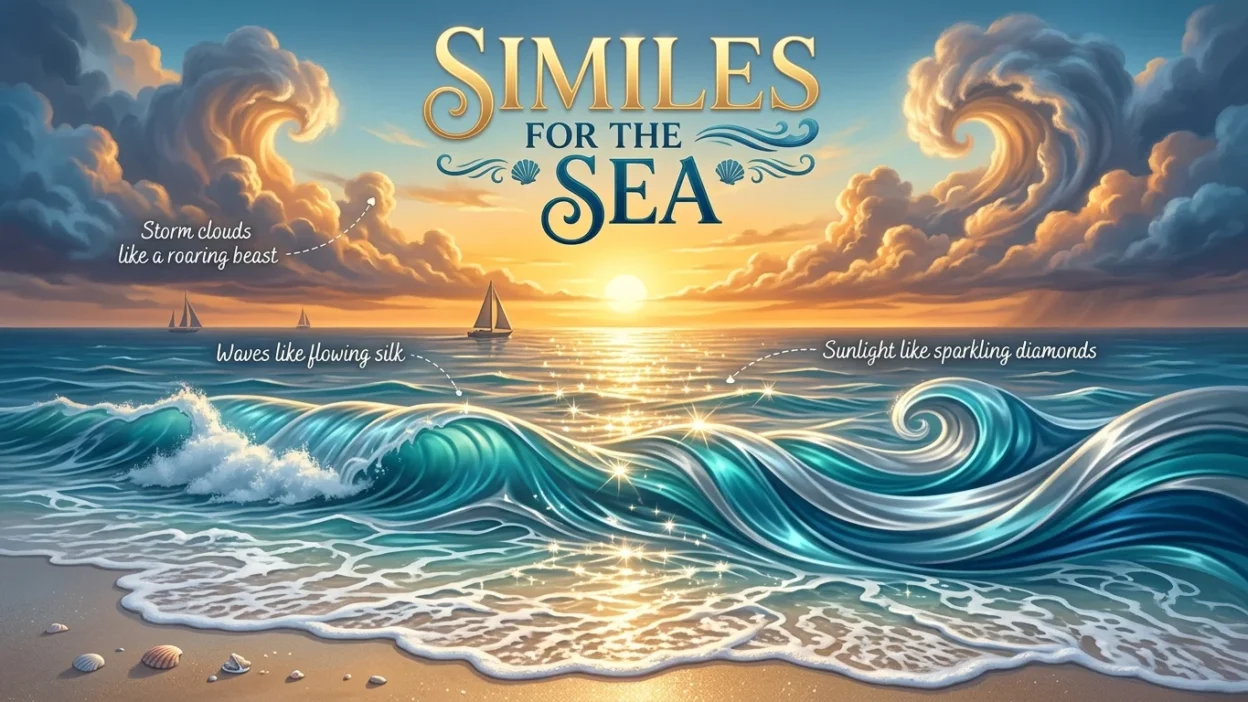
The sea is one of nature’s most fascinating wonders. It can sparkle under the golden sun, whisper along a quiet beach, or roar during a powerful storm. Its changing colors, endless waves, and mysterious depths make it a wonderful subject for creative writing. However, simply describing the sea as beautiful or deep does not always capture its magic.
That is where similes come in. A simile compares one thing to another using words such as like or as. For example, “The sea sparkled like a field of diamonds” helps readers imagine sunlight dancing across the water. Similarly, “The waves roared like hungry lions” creates a picture of a wild and powerful ocean.
Whether you are writing a poem, a short story, a school assignment, or a descriptive essay, similes can make your words more vivid and memorable. In this guide, you will discover beautiful, funny, poetic, and powerful similes for the sea, along with example sentences and practical writing exercises.
What Is a Simile for the Sea?
A simile for the sea is a figure of speech that compares the sea, its waves, or its surroundings to something familiar. It uses like or as to create a clear mental picture.
For example:
- The sea was as blue as a sapphire.
- The waves danced like playful children.
- The ocean roared like a giant beast.
- The water was as smooth as glass.
- The sea glittered like scattered diamonds.
These comparisons help readers imagine the sea’s appearance, movement, sound, and mood.
1. Beautiful Similes for the Sea
These similes highlight the ocean’s beauty and charm.
- The sea sparkled like a thousand diamonds.
- The ocean was as blue as a precious sapphire.
- The water shimmered like liquid silver.
- The sea looked like a painting created by nature.
- The waves glittered like golden ribbons.
- The ocean was as beautiful as a dream.
- The sea glowed like a jewel beneath the sunlight.
- The water reflected the sky like a giant mirror.
- The shoreline looked like a picture on a postcard.
- The sea shone like polished glass.
- The waves curled like ribbons of silk.
- The ocean was as lovely as a garden in spring.
- The sea glittered like stars scattered across the earth.
- The water looked like blue crystal.
- The ocean stretched like a magnificent painting across the horizon.
2. Similes for a Calm Sea
Use these comparisons to describe peaceful water and quiet coastal scenes.
- The sea was as calm as a sleeping baby.
- The water lay like a blanket of blue silk.
- The ocean was as peaceful as a quiet garden.
- The waves moved like a gentle lullaby.
- The sea rested like a tired giant.
- The water was as smooth as glass.
- The ocean floated like a dream beneath the sky.
- The waves whispered like secrets in the wind.
- The sea was as still as a pond.
- The water rested like a cat in the sunshine.
- The waves glided like feathers across the shore.
- The ocean was as quiet as a sleeping village.
- The waves rolled like slow-moving clouds.
- The sea spread like a soft blue blanket.
- The water breathed like a peaceful sleeper.
3. Similes for a Rough Sea
These similes capture the strength and movement of a wild ocean.
- The sea roared like a hungry lion.
- The waves crashed like exploding thunder.
- The ocean raged like an angry giant.
- The sea was as wild as a runaway horse.
- The waves fought like warriors on a battlefield.
- The ocean shook like a giant waking from sleep.
- The sea tossed the boat like a toy.
- The waves rose like towering mountains.
- The water churned like a boiling pot.
- The sea growled like a fierce beast.
- The waves struck the rocks like hammer blows.
- The ocean was as fierce as a raging bull.
- The sea twisted like a giant serpent.
- The waves pounded the shore like marching soldiers.
- The stormy ocean looked like a battlefield of water.
4. Similes for the Color of the Sea
The sea changes color with the weather, sunlight, and depth. These similes help describe its many shades.
- The sea was as blue as a summer sky.
- The water looked like green glass.
- The ocean was as turquoise as a tropical lagoon.
- The sea shone like a sheet of silver.
- The water was as dark as midnight.
- The ocean looked like a bowl of emeralds.
- The sea glowed like molten gold at sunset.
- The water was as clear as crystal.
- The sea turned gray like an old stone wall.
- The ocean was as green as fresh leaves.
- The water looked like liquid jade.
- The sea was as black as ink at night.
- The waves shone like blue satin.
- The ocean looked like a giant sheet of turquoise silk.
- The sea changed colors like a chameleon.
5. Similes for Sea Waves
Waves give the sea its rhythm, movement, and energy.
- The waves rolled like hills across the water.
- The waves danced like children at a party.
- The waves curled like the fingers of a giant hand.
- The surf rushed like a herd of wild horses.
- The waves moved like flowing ribbons.
- The water rose like a wall of glass.
- The waves tumbled like playful puppies.
- The surf spread like white lace.
- The waves chased one another like racing runners.
- The water bounced like a ball on the shore.
- The waves folded like sheets of blue fabric.
- The sea surged like a river with a powerful heartbeat.
- The waves leaped like dolphins.
- The water rolled like a moving carpet.
- The waves broke like white horses galloping toward land.
6. Similes for the Sound of the Sea
Bring the sounds of the ocean to life with these vivid comparisons.
- The sea whispered like a secret.
- The waves roared like a giant drum.
- The surf hissed like a boiling kettle.
- The water murmured like a quiet conversation.
- The ocean boomed like distant thunder.
- The waves clapped like an excited audience.
- The sea sang like a choir.
- The surf rattled like pebbles tumbling in a jar.
- The waves crashed like breaking glass.
- The ocean hummed like a distant engine.
- The water sighed like a tired traveler.
- The waves slapped the shore like clapping hands.
- The sea rumbled like a passing train.
- The surf crackled like a burning fire.
- The waves whispered like wind through the trees.
7. Similes for the Sea at Sunset
Sunset transforms the sea into a scene filled with golden light and warm colors.
- The sea glowed like molten gold.
- The sunset spread across the water like spilled paint.
- The waves shone like copper coins.
- The ocean burned like glowing embers.
- The horizon looked like a ribbon of fire.
- The water glittered like orange diamonds.
- The sea reflected the sun like a golden mirror.
- The waves looked like strips of pink silk.
- The sky melted into the sea like watercolor paint.
- The ocean glowed like a lantern.
- The water shimmered like rose-colored glass.
- The sunset painted the sea like an artist’s canvas.
- The waves flickered like flames.
- The horizon shone like a golden doorway.
- The sea blushed like a rose beneath the evening sky.
8. Similes for the Sea at Night
These comparisons create a mysterious and peaceful nighttime atmosphere.
- The sea was as dark as ink.
- The ocean shimmered like a field of stars.
- The waves glowed like silver ribbons beneath the moon.
- The sea stretched like a black velvet blanket.
- The moonlight danced like diamonds on the water.
- The ocean was as mysterious as a hidden cave.
- The waves whispered like ghosts.
- The sea looked like a dark mirror.
- The water sparkled like scattered moonstones.
- The ocean rested like a giant in the shadows.
- The sea was as quiet as a sleeping forest.
- The waves glimmered like silver fish.
- The horizon disappeared like a road into darkness.
- The sea looked like a secret waiting to be discovered.
- The moonlit water shone like a trail of silver dust.
9. Similes for the Deep Sea
The deep sea is mysterious, dark, and full of hidden wonders.
- The deep sea was as dark as a sealed room.
- The ocean floor looked like another planet.
- The water surrounded the submarine like a heavy blanket.
- The deep sea was as mysterious as a forgotten kingdom.
- The darkness spread like spilled ink.
- The ocean depths were like a hidden universe.
- The deep water felt as endless as space.
- The seabed looked like a desert beneath the waves.
- The darkness swallowed the light like a hungry monster.
- The deep sea glittered like a treasure chest.
- The underwater caves twisted like ancient tunnels.
- The ocean floor was as quiet as a deserted town.
- The water pressed around the vessel like a giant hand.
- The deep sea appeared like a world from a dream.
- The hidden reefs shone like jewels in a dark room.
10. Similes for the Sea and Sky
The sea and sky create beautiful images when their colors and shapes blend together.
- The sea met the sky like two friends embracing.
- The horizon stretched like a line drawn with a ruler.
- The clouds floated above the water like ships.
- The sky reflected in the sea like a painting in a mirror.
- The ocean and sky blended like blue watercolor.
- The clouds rested over the sea like soft pillows.
- The horizon looked like a doorway into infinity.
- The sunlight spread across the waves like golden dust.
- The sea mirrored the clouds like polished glass.
- The sky hung above the ocean like a vast blue roof.
- The clouds sailed like white ships.
- The sea stretched beneath the sky like a giant canvas.
- The morning light spread like a golden curtain.
- The horizon glowed like a distant flame.
- The ocean and sky merged like two drops of water.
11. Similes for the Sea Breeze
A sea breeze can feel refreshing, gentle, or fierce. These comparisons help describe its different moods.
- The sea breeze felt as cool as ice.
- The wind brushed my face like a soft feather.
- The breeze smelled like fresh rain.
- The sea air was as refreshing as a glass of cold water.
- The wind danced around us like a playful child.
- The breeze whispered like a quiet friend.
- The salty air stung like tiny needles.
- The wind swept across the beach like a wild horse.
- The sea breeze felt like a cool silk scarf.
- The wind tugged at my clothes like a curious puppy.
- The air was as fresh as a mountain morning.
- The breeze moved through my hair like gentle fingers.
- The wind howled like a hungry wolf.
- The salty air clung to my skin like a fine mist.
- The breeze carried the ocean’s scent like a gift.
12. Poetic Similes for the Sea
These imaginative comparisons are ideal for poems, reflective writing, and emotional scenes.
- The sea was like a dream that never ended.
- The waves danced like thoughts inside a restless mind.
- The ocean sighed like a heart full of memories.
- The sea was as endless as a lover’s longing.
- The waves whispered like forgotten songs.
- The ocean shone like hope after a storm.
- The sea was like a book with endless pages.
- The waves returned like memories from the past.
- The horizon called like a distant dream.
- The ocean was as deep as the human soul.
- The waves rose like feelings too strong to hide.
- The sea moved like a poem without words.
- The water glittered like pieces of a broken dream.
- The ocean stretched like a story without an ending.
- The sea sang like a voice from another world.
13. Similes for the Sea for Kids
These simple comparisons are perfect for young writers and school assignments.
- The sea was as blue as a crayon.
- The waves jumped like happy puppies.
- The water sparkled like glitter.
- The sea was as big as the world.
- The waves splashed like children in a pool.
- The ocean looked like a giant blue blanket.
- The sea breeze felt like a soft hug.
- The waves rolled like toy cars.
- The water shone like a shiny coin.
- The sea roared like a dinosaur.
- The waves danced like ballerinas.
- The beach was as warm as a blanket in the sun.
- The sea was as clear as a window.
- The little waves tickled my feet like tiny fingers.
- The ocean looked like a giant swimming pool.
14. Similes for the Sea in Stories
Use these comparisons to make stories more vivid and engaging.
- The sea stretched like an endless road.
- The waves attacked the ship like a pack of wolves.
- The ocean waited like a secretive giant.
- The sea was as unpredictable as a wild animal.
- The waves swallowed the boat like a hungry mouth.
- The ocean looked like a kingdom ruled by storms.
- The sea pulled at the shore like a restless child.
- The waves chased the ship like angry pursuers.
- The ocean was as lonely as an abandoned castle.
- The water curled around the rocks like a living creature.
- The sea opened before the ship like a mysterious gate.
- The waves battered the vessel like heavy fists.
- The ocean lay ahead like an unexplored map.
- The sea shimmered like a magical doorway.
- The stormy water twisted like a monster in its sleep.
15. Funny Similes for the Sea
Add a little humor to your ocean descriptions with these playful comparisons.
- The sea was as noisy as a classroom after lunch.
- The waves bounced like popcorn in a hot pan.
- The ocean tossed the boat like a dog shaking a toy.
- The sea breeze messed up my hair like a mischievous barber.
- The waves chased my feet like overexcited puppies.
- The sea roared like a grumpy grandparent.
- The water splashed like a toddler throwing a tantrum.
- The waves wiggled like jelly on a plate.
- The ocean looked like a giant bowl of blue jelly.
- The seagulls screamed like shoppers fighting over a sale.
- The sea bounced the little boat like a trampoline.
- The wind pushed my umbrella like an impatient giant.
- The waves tickled my toes like a cheeky little brother.
- The ocean gurgled like a stomach asking for lunch.
- The sea behaved like a giant who had too much coffee.
Simile Sentences for the Sea
Here are 15 complete sentences that demonstrate how to use sea similes naturally.
- Under the bright morning sun, the sea sparkled like a thousand diamonds.
- After the storm passed, the water became as smooth as glass.
- The waves roared like hungry lions as they crashed against the cliffs.
- At sunset, the ocean glowed like molten gold.
- The salty breeze brushed my cheeks like a soft feather.
- Beneath the moon, the waves shimmered like silver ribbons.
- The deep sea was as mysterious as a hidden kingdom.
- White foam spread across the beach like delicate lace.
- The sea stretched before us like an endless blue road.
- The little boat rocked like a cradle on the waves.
- The ocean whispered like an old storyteller sharing secrets.
- The storm tossed the ship like a toy in a bathtub.
- The water was as clear as crystal near the tropical shore.
- The waves danced like children playing in the sand.
- As darkness fell, the sea became as black as ink.
How to Use Similes for the Sea in Writing
Sea similes work best when they help readers imagine a specific scene or feeling. Instead of simply calling the sea beautiful, describe what makes it beautiful.
- For descriptive essays: Compare the sea’s colors, light, and movement. For example, “The water glittered like diamonds.”
- For poems: Choose emotional or imaginative comparisons. For example, “The ocean sighed like a heart full of memories.”
- For adventure stories: Use powerful images to build tension. For example, “The waves attacked the ship like wild horses.”
- For peaceful scenes: Choose gentle comparisons. For example, “The sea lay as smooth as glass.”
- For children’s writing: Use familiar objects and playful images. For example, “The waves danced like happy children.”
Avoid adding too many similes to a single paragraph. One strong comparison can be more effective than several competing images.
How to Create Your Own Similes for the Sea
Creating your own sea similes is easier than you might think.
- Choose a feature. Decide whether you want to describe the sea’s color, sound, movement, or mood.
- Think of something familiar. Consider glass, silk, animals, music, fire, or clouds.
- Use “like” or “as.” Connect the two ideas to form your comparison.
- Match the mood. Use gentle comparisons for calm water and powerful comparisons for storms.
- Make the image clear. Choose words that help readers picture the scene.
For example, to describe gentle waves, you could write, “The waves moved like sleepy cats.” To describe a storm, you might write, “The sea roared like a thousand angry drums.”
Why Use Similes for the Sea?
Similes help writers describe the ocean in ways that ordinary words sometimes cannot.
- They create vivid imagery: Readers can picture sparkling water, crashing waves, and distant horizons.
- They express emotions: A calm sea may suggest peace, while a stormy sea can suggest fear or anger.
- They improve storytelling: Strong comparisons make settings more interesting and memorable.
- They encourage creativity: Writers can explore unusual connections between nature and everyday life.
- They support learning: Students can practice figurative language while writing about the natural world.
The best similes are clear, meaningful, and suited to the mood of the writing.
Common Words Related to Sea Similes
Use these words to create your own comparisons and expand your vocabulary.
- Colors: Blue, turquoise, emerald, silver, golden, gray
- Movement: Rolling, crashing, swirling, drifting, dancing, surging
- Sounds: Roaring, whispering, rumbling, hissing, murmuring, splashing
- Textures: Smooth, silky, glassy, foamy, rough, shimmering
- Feelings: Peaceful, mysterious, powerful, lonely, exciting, frightening
- Natural comparisons: Clouds, rivers, mountains, storms, stars, wind
- Everyday comparisons: Blankets, mirrors, ribbons, glass, drums, toys
Combine these words with familiar objects or experiences to create memorable descriptions of the sea.
Practical Exercise: Test Your Simile Skills
Complete each sentence with a suitable comparison. Try answering before checking the solutions.
- The sea sparkled like __________.
- The stormy ocean roared like __________.
- The calm water was as smooth as __________.
- The waves danced like __________.
- The sea at night was as dark as __________.
- The sunset made the ocean glow like __________.
- The sea breeze felt like __________.
- The deep sea was as mysterious as __________.
- The waves crashed against the rocks like __________.
- The sea stretched toward the horizon like __________.
Answers With Explanations
- A thousand diamonds. This comparison describes sunlight sparkling on the water.
- A hungry lion. This suggests the loud, fierce sound of a storm.
- Glass. Glass creates an image of a smooth, still surface.
- Playful children. This makes the waves seem lively and cheerful.
- Ink. Ink suggests deep darkness.
- Molten gold. This describes the warm, glowing colors of sunset.
- A soft feather. This suggests a gentle, pleasant breeze.
- A hidden kingdom. This creates a sense of mystery and discovery.
- Heavy drums. This emphasizes the loud, repeated impact of the waves.
- An endless road. This suggests the sea’s vastness and the distant horizon.
Other answers can also be correct. The goal is to create a comparison that makes sense and helps readers picture the scene.
Conclusion
The sea offers endless inspiration for creative writing. It can sparkle like diamonds, whisper like a secret, or roar like a hungry lion. With the right simile, you can describe its beauty, power, mystery, and changing moods in a way that captures a reader’s imagination.
Whether you are writing a poem, completing a school assignment, or creating a story, these similes for the sea can help you express your ideas more clearly. Try mixing familiar objects with the colors, sounds, and movements of the ocean to create original comparisons of your own.
Which sea simile is your favorite? Share it with others and keep exploring the wonderful world of figurative language.
Frequently Asked Questions
1. What is a good simile for the sea?
A good example is “The sea sparkled like a thousand diamonds.” It creates a vivid image of sunlight shining on the water.
2. What is a simile for a calm sea?
“The sea was as smooth as glass” is a common and effective simile for calm water.
3. What is a simile for a rough sea?
“The sea roared like a hungry lion” describes the powerful sound and wild movement of rough water.
4. What is a poetic simile for the sea?
“The ocean sighed like a heart full of memories” gives the sea an emotional and reflective quality.
5. How do you write your own sea simile?
Choose a feature of the sea, such as its color or sound, and compare it with something familiar using like or as. For example, “The waves curled like ribbons.”

Ivan Petrov is a fictional Russian language enthusiast and cultural writer who has a deep passion for literature, folklore, and traditional expressions. Growing up in Saint Petersburg, he developed a strong interest in the history of the Russian language and the stories behind its idioms. Ivan enjoys researching the origins of popular sayings and explaining their meanings in a way that is easy for international readers to understand. His educational articles focus on making complex language concepts simple and engaging. He believes that idioms are an important part of preserving cultural heritage and helping people communicate more naturally. Through his work, Ivan encourages readers to appreciate the richness of Russian culture and language while making learning both enjoyable and practical.